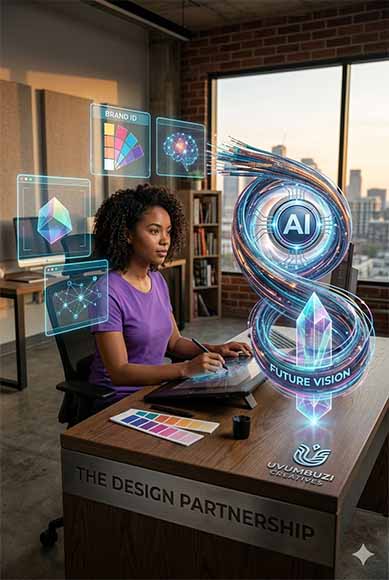
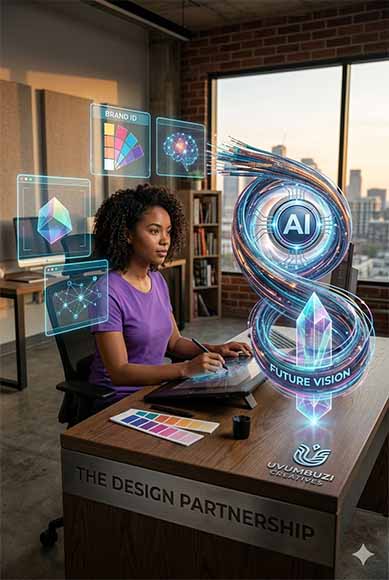
AI & The Modern Designer: From Rivalry to Partnership
The integration of AI into the design world isn’t a threat to our careers; it’s a fundamental shift in how we create. Instead of replacing us, AI is reshaping our roles from “production workers” to strategic visionaries.
The Shift: From Manual Labor to Creative Strategy
In the past, we spent hours on the “heavy lifting”—tedious tasks like background removal, resizing, or basic layout iterations. AI is now taking over these repetitive chores. This change is a massive win for us because it clears the schedule to focus on what actually matters: creative strategy and high-level problem solving.
Why the “Human Touch” Still Wins
Even the most advanced AI lacks the essential qualities that make a design resonate:
- Emotional Depth: A machine doesn’t have feelings. It can’t understand the “vibe” or the subtle emotional nuances that a human designer injects into a brand’s soul.
- Cultural Awareness: AI doesn’t live in our world. It can’t navigate local trends, social shifts, or the specific cultural context that makes a design feel relevant and timely.
- Client Empathy: One of our most valuable skills is the ability to listen to a client’s vague, sometimes confusing vision and translate it into a visual story. That’s a human connection AI simply can’t replicate.
The New Career Edge
The designers who will thrive in this new era are those who build AI literacy. By blending traditional design principles with the speed of AI, you aren’t just a user of the software—you are the architect of the vision.
For me, this means leaning even harder into specialized skills like advanced photo manipulation. I can use AI to handle the mundane parts of the workflow, while I provide the “Future Vision” and the technical polish that makes the final work stand out.
The Bottom Line: AI isn’t coming for our jobs; it’s giving us the tools to scale our talent and focus on the art of the big idea.
Leave a Reply